
EkBeBeauty Academy
You finished your PMU course, received your certificate, and then realized you are not quite sure what comes next. That feeling is completely normal. Most new artists experience this moment: the knowledge is there, but the confidence to work with real clients has not fully arrived yet.
This guide explains what to do after PMU course training and how to move from your last day in class toward your first real clients. The focus is practical: consistent practice, model work, portfolio building, introductory pricing, and continued support while your skills develop.
Step 1: Do Not Stop Practicing
The most common mistake after a course is taking a break.
- “I will wait until a client comes along.”
- “I need to review my notes more.”
- “I am not ready yet.”
This is a trap. Reviewing theory is useful, but confidence develops through repeated, focused practice.
After your course, keep practicing consistently, starting on training materials and moving to live models when your technique and trainer feedback indicate that you are ready. The weeks immediately after training are when your hands begin building muscle memory and your workflow becomes more familiar.
A long break can make that early progress fade. Even short practice sessions help you stay connected to the technique, understand hand pressure, review your setup, and become more confident before working with paying clients.
Step 2: Start Finding Practice Models
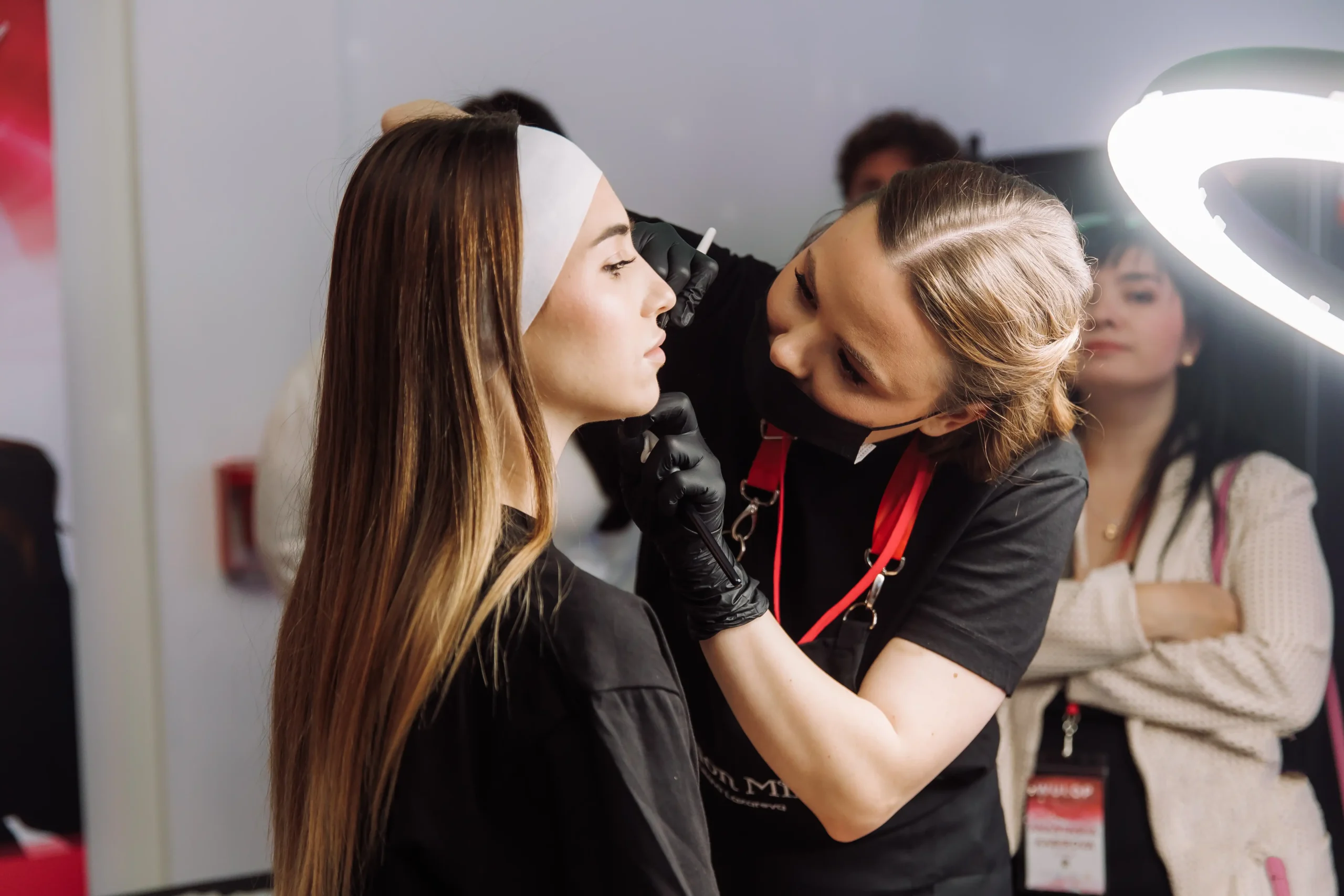
Models are one of your most valuable learning tools at this stage. Your first goal is not immediate income. It is to improve your technique, become comfortable working with real people, and create the first examples for your portfolio.
It is normal to offer free or reduced-price model appointments at the beginning. Keep the terms clear: explain that you are building experience, communicate what the appointment includes, and follow the same safety, consultation, consent, and aftercare process you would use with a paying client.
How to Find PMU Practice Models
- Announce on social media that you are accepting practice models.
- Ask friends, family, and people you know personally.
- Post in relevant local community groups and forums.
- Reach out to people who have already shown interest in your services.
- Ask your trainer whether your current model work is ready for portfolio use.
Photograph every appropriate session before and after the procedure, with the model’s permission. These images become the foundation of your portfolio. Without clear examples of your work, it is difficult for future clients to understand your style and current skill level.

Step 3: Build Your Portfolio With Intention
A strong PMU portfolio is not simply a collection of attractive photos. It is evidence of your current technique, consistency, and professional presentation.
Use clear lighting, clean angles, and consistent framing. Avoid filters that change skin tone, color, texture, or the visible result. Whenever possible, include healed results several weeks after the procedure, not only fresh work immediately after the appointment.
Clients make booking decisions based heavily on what they can see. An honest, carefully organized portfolio makes it easier for potential clients to understand your work and decide whether your style suits them.
Students comparing permanent makeup training in Vancouver should also look at how a course teaches photography, model practice, feedback, and portfolio development, not only the certificate received at the end.
What to Include in an Early PMU Portfolio
- Clear before-and-after photographs.
- Consistent lighting and camera angles.
- Several examples instead of repeatedly posting one result.
- Healed results when clients return and consent to photography.
- Short, accurate descriptions of the service performed.
Step 4: Know When to Start Charging
There is no universal rule for the exact moment a new PMU artist should begin charging. A useful benchmark is consistency: when you understand the complete process, can maintain a safe workflow, communicate clearly, and produce increasingly predictable results, you can begin moving toward paid appointments.
For some artists, this may happen after approximately 10 to 20 practice models. Others may need more time. The number alone is not the deciding factor; the quality of your process, results, and trainer feedback matters more.
Start with a clearly communicated introductory price and increase it gradually as your portfolio and confidence grow. Avoid remaining underpriced indefinitely. Prices that stay extremely low can create the wrong expectation and make professional positioning harder later.
Step 5: Stay Connected With Your Trainer
Good training does not end on the last day of class. Use any post-course support included with your program. Send clear photos for review, ask focused questions, and be open to correction.
Continued guidance can help you identify mistakes before they become habits. It also gives you a more objective way to decide when your work is ready for additional models, portfolio publication, or introductory paid appointments.
This is why choosing the right trainer matters. A mentor who provides useful feedback after training can make a significant difference during your first months as a beginner permanent makeup artist.
Step 6: Stop Comparing Yourself to Artists With Years of Experience
This may be the most important point of all.
Your first year in permanent makeup is a period of growth, mistakes, repetition, correction, and real practice. Comparing early work with results from artists who have spent years refining their technique can make you feel discouraged even when you are making meaningful progress.
Compare your work with where you were one month ago. Are your lines cleaner? Is your consultation more confident? Is your setup more efficient? Are your photographs clearer? Do models feel informed and comfortable throughout the appointment?
Those improvements are evidence that you are moving in the right direction.
The Bottom Line
The real learning continues after the course ends, and it happens through practice.
Your certificate opens the door, but what you do during the first six to twelve months after training will shape your development as an artist. Practice consistently, find suitable models, build an honest portfolio, begin taking clients without waiting for impossible perfection, and stay connected to your mentor.
The path from student to confident PMU artist is not a sprint. It is a long-term process. The students who progress are usually the ones who keep practicing, keep asking specific questions, and keep improving one appointment at a time.
Ready to Build Your PMU Career in Vancouver?
EkBeBeauty Academy offers permanent makeup and beauty training in Vancouver with personalized practice assignments, hands-on model guidance where included, individual feedback, and post-course support to help students move forward with confidence.
FAQ
What should I do right after finishing my PMU course?
Continue practicing consistently, review your training materials, work on practice materials, and begin looking for suitable models when you are ready. The first weeks after training are important for developing muscle memory and confidence.
How many practice models do I need before charging clients?
There is no exact number, but many beginner PMU artists may need approximately 10 to 20 practice models before they feel ready to charge. Consistent results, a safe workflow, and confidence throughout the complete procedure matter more than reaching a specific number.
Should I work for free after my PMU course?
Free or reduced-price model appointments can help you build experience and a portfolio at the beginning. This period should be temporary. As your results and confidence improve, gradually move toward paid appointments.
Why is post-course support important?
Post-course support gives students an opportunity to receive feedback on real practice, correct mistakes early, and understand what to improve. This is especially useful for beginner PMU artists who are still developing confidence.
How do I get my first PMU clients?
Build a clear portfolio, publish model work consistently, ask for referrals, share your learning process, and offer transparent introductory pricing. Potential clients need to see your work and understand your process before they feel ready to book.
One of the most common questions from people new to permanent makeup is: Can I just take a course covering all zones at once?
The honest answer depends on where you are right now. Are you a complete beginner with no beauty background, or are you already a working beauty professional ready to expand your services?
Both situations are different, and the right training path should match your current experience, confidence level, and career goals.
If you are comparing PMU training in Vancouver, this guide will help you understand whether it makes more sense to start with one permanent makeup zone first or choose a broader PMU course that includes multiple areas.

If You Are Starting From Scratch
If you have never worked in the beauty industry before, the advice is clear: start with one zone.
Choose either permanent makeup brows or permanent makeup lips, whichever resonates with you more and whichever is more in demand in your specific market.
Demand for different services can shift depending on season, location, and client trends. That is why it is worth researching what clients in your area are actively looking for before choosing your first course.
For example, some students may feel more drawn to the PMU Brows Course in Vancouver because brow services are highly requested and easy for clients to understand. Others may prefer the Lip Blush Course in Vancouver because they are interested in color correction, lip shape, and soft healed results.
Why Start With Just One Zone?
Permanent makeup is a serious technical discipline. It requires not only theory, but also many hours of hands-on practice, correction, repetition, and confidence building.
When you focus on one direction first, you can build confidence faster. You have more mental space to understand the technique, refine your hand movement, practice your workflow, and learn how to evaluate your results.
Trying to learn everything at once can sometimes leave beginners feeling uncertain in every area instead of strong in one.
A focused course gives you a clearer starting point.
The Benefit of Going Deep First
Being excellent at one service is more valuable than being average at many. Your first goal should not be to offer everything immediately. Your first goal should be to build clean technique, safe habits, and confidence with real practice.
Once your first skill becomes stronger, it becomes easier to add new services later because you already understand the foundation of client care, consultation, hygiene, hand control, and practice discipline.
How to Build From There
Once you have mastered your first zone, you can add a second one.
Ideally, many permanent makeup artists benefit from having both brows and lips in their skill set. These services complement each other naturally. A client who comes for brows may later be interested in lip blush, and a lip client may also want brow enhancement.
This is where upselling can happen effortlessly and authentically, not by pressure, but by offering services that genuinely fit the client’s needs.
Why Lash Lift Is Also Worth Considering
Lash lifting is also worth mentioning.
It is one of the simplest, safest, and most popular treatments you can add to your beauty service menu. Clients love it because the result is visible, natural-looking, and low maintenance.
For artists, lash lift can be a smart addition because it requires minimal product, less time compared to many advanced services, and can generate consistent income without adding unnecessary pressure to your workload.
Adding lash lift to your menu can be a strong move for any artist who wants to increase income while keeping the service simple and approachable. You can learn more about this option on the Lash Lift Course in Vancouver page.

If You Are Already Working in Beauty
If you already have a client base, you are in a stronger position.
It does not matter whether your current service is lashes, brows, nails, esthetics, skincare, or another beauty service. If you already work with clients, you already understand communication, trust, appointments, client expectations, and professional boundaries.
That experience matters.
In this case, taking on two or three PMU zones at once can be entirely reasonable. You already have a foundation in working with people, and you may also have clients who trust you enough to become practice models or future PMU clients.
Your Biggest Advantage
Your biggest advantage is that finding practice models will likely be easier. Your existing clients already know you, trust you, and understand your professionalism.
This can make your transition into permanent makeup smoother.
However, the key is still practice. Knowledge without hands-on repetition does not turn into strong results. Even if you already work in beauty, PMU requires technical discipline, patience, and consistent practice.
The Main Difference Between Beginners and Beauty Professionals
The biggest difference is not talent. It is context.
A complete beginner is learning everything at once:
- how to work with clients
- how to communicate professionally
- how to prepare a service area
- how to understand skin and healing
- how to practice technique
- how to build confidence
A working beauty professional already understands some of these elements. That makes it easier to take on more training at the same time.
This is why a complete beginner may benefit from starting with one focused zone, while a beauty professional may be ready for a broader Permanent Makeup Course in Vancouver.
The Bottom Line
Complete beginner: Start with one zone, practice deeply, build confidence, then expand.
Working beauty professional: Two to three zones can make sense, especially if you already have a client base and are ready to focus seriously on hands-on practice.
For everyone: Brows, lips, and lash lift can create a powerful and balanced service combination for consistent income.
Do not rush to learn everything at once. Being exceptional at one thing is always more valuable than being average at everything.
The quality of your work is your reputation, and in permanent makeup, reputation is built one session at a time.
Final Thoughts
Choosing the right PMU course is not only about how many services you can learn. It is about how well you can understand, practice, and perform them.
If you are new to beauty, give yourself permission to start focused. If you are already a beauty professional, you may be ready for a larger training path. In both cases, your progress depends on practice, feedback, and the quality of your education.
At EkBeBeauty Academy, our training approach focuses on individual progress, practical assignments, hands-on guidance where included, and support after training so students know what to improve before working with real clients. You can compare all training options on the Courses page.
Ready to Choose Your PMU Training Path?
EkBeBeauty Academy offers permanent makeup and beauty training in Vancouver with a focus on personalized practice assignments, individual feedback, and beginner-friendly guidance. Explore our courses or book an appointment to discuss which training path fits your goals.
FAQ
Should beginners learn all PMU zones at once?
If you are completely new to the beauty industry, it is usually better to start with one PMU zone first. This helps you focus deeply, build confidence, and develop stronger technique before adding more services.
Which PMU zone should I start with?
Many beginners start with either PMU brows or lips. The best choice depends on what interests you most and what is in demand in your local market.
Can beauty professionals learn multiple PMU zones at once?
Yes. If you already work in beauty and have a client base, learning two or three PMU zones at once can make sense. You already understand client communication, trust, and professional service flow.
Why is lash lift a good service to add?
Lash lift is popular, beginner-friendly, and does not require the same level of complexity as permanent makeup. It can help beauty professionals increase income with a simple and in-demand service.
Is it better to be good at one PMU service or average at many?
It is always better to become strong in one service first. In permanent makeup, your reputation depends on the quality and consistency of your work.
Where can I take PMU training in Vancouver?
EkBeBeauty Academy offers permanent makeup and beauty training in Vancouver, including PMU brows, lip blush, lash line, lash lift, and broader PMU training options.
Choosing a permanent makeup trainer is one of the most important decisions you will make at the beginning of your PMU career. The mentor you choose can affect your technique, your confidence, your understanding of safety, and how prepared you feel when you begin working with real clients.
This decision deserves the same care as choosing a business partner. A good PMU trainer is not just someone with beautiful photos online. The right mentor should teach clearly, support your learning style, give honest feedback, and help you understand the professional standards behind permanent makeup work.
If you are comparing PMU training courses in Vancouver, here are the most important things to look for before you enroll.
1. Your Trainer Needs to Resonate With You
This may sound simple, but it is the foundation of the entire learning experience. You need to feel comfortable with the person who will teach you. Pay attention to the way they speak, explain, answer questions, and describe their values as an artist and educator.
If something feels off from the first conversation, trust that feeling. Training requires focus, openness, and correction. If you feel tense or uncomfortable from the beginning, it can affect how well you absorb information and how confident you feel during practice.
Speak With the Trainer Before You Commit
Before enrolling in any permanent makeup course, try to speak with the trainer directly. A short phone call, online consultation, or in-person conversation can tell you more than a polished social media page.
During that conversation, ask yourself:
- Do they explain things clearly?
- Do they listen to your questions?
- Do they seem patient and professional?
- Do you feel comfortable learning from them?
You will often know quickly whether this is the right person to guide you.
2. Trust Is Non-Negotiable
Your PMU trainer needs to earn your trust. This does not mean they only need to look impressive online. They should inspire confidence through their experience, their attitude, their teaching style, and the way they talk about their students and clients.
A strong mentor should make you feel motivated, not intimidated. You should feel that they care about the quality of your education, not just about selling a course.
Pay attention to how they communicate about their work. A trainer who takes education seriously will usually talk about safety, healed results, client communication, practice, feedback, and long-term student growth.
3. Look at the Message, Not Only the Portfolio
A beautiful portfolio matters, but it is not the only thing that matters. When choosing a PMU trainer, look beyond before-and-after photos. Pay attention to what the trainer actually communicates.
Ask yourself:
- What values do they share?
- How do they talk about education?
- Do they explain their process?
- Do they show real teaching experience?
- Do they seem passionate about helping students improve?
A trainer who brings meaning to every lesson can give you something that a highlight reel cannot: real knowledge that stays with you after the course ends.
4. Individual Approach Is Not a Bonus
Every student learns differently. Some students are visual learners. Some need written notes. Some need more repetition. Others need more verbal explanation or hands-on correction before the technique starts to feel natural.
A strong PMU mentor understands this. Instead of delivering the same lecture to every student, they adapt the learning process where possible and pay attention to what each student needs.
Before you enroll, ask:
- Is the course private, semi-private, or group-based?
- How many students are in each class?
- Will I receive feedback during practice?
- Is post-course support included?
- Will I have practice assignments after training?
These questions reveal how much the trainer values each student’s progress. At EkBeBeauty Academy, the training approach is built around focused education, personalized practice assignments, hands-on guidance where included, and post-course support.
5. Look at What Their Students Achieve
One of the strongest signs of a trainer’s quality is what their students are able to do after training. Look at student work, student progress, and the level of confidence graduates develop over time.
You can ask or look for:
- Examples of student results
- Before-and-after work from graduates
- Student testimonials
- Whether students continue practicing after class
- Whether graduates build professional portfolios
This does not mean every student will have the same outcome. Results depend on practice, effort, consistency, and individual learning pace. But if a trainer’s students show clear progress, that is a strong sign that the training has real value.
6. Choose Training That Builds Professional Confidence
Permanent makeup training is not only about learning how to hold a machine or follow a pattern. A good course should help you understand the full professional workflow behind the service.
Depending on the course, this may include:
- Client consultation
- Skin analysis
- Color theory
- Technique safety
- Needle and machine basics
- Mapping and symmetry
- Aftercare explanation
- Practice on models where included
- Feedback after training
If you are interested in focused permanent makeup education, you can explore the Permanent Makeup Course in Vancouver or choose a specialized program such as PMU brows, lip blush, or lash line enhancement.
7. Remember: You Are Investing in Yourself
Training with the right mentor is not just an expense. It is an investment in your skills, your confidence, and your future professional standards.
A very cheap course with weak instruction can cost more in the long run. You may lose time, feel uncertain about your technique, or need to relearn important fundamentals later. The right trainer should help you build a strong foundation from the beginning.
Choose someone who inspires you, someone you trust, and someone whose teaching style supports real learning. That is the type of mentor who can help you grow with more clarity and confidence.
Final Thoughts
Learning permanent makeup is a serious step. The trainer you choose should make you feel supported, challenged, and guided. Look for trust, communication, individual feedback, real student progress, and a teaching approach that matches how you learn.
If you are ready to compare training options, explore EkBeBeauty Academy courses in Vancouver or book a consultation to discuss which program fits your goals.
FAQ
How do I know if a PMU trainer is right for me?
A good PMU trainer should make you feel comfortable, answer your questions clearly, explain their teaching approach, and show real experience in both permanent makeup and student education.
Should I choose a private or group PMU course?
It depends on your learning style. Private or small-group training can offer more personal attention, while larger groups may provide less individual feedback. Ask about class size before enrolling.
What should I ask before booking a permanent makeup course?
Ask about course structure, practice models, post-course support, class size, materials, certification, and how feedback is provided during and after training.
Is student work important when choosing a PMU trainer?
Yes. Student work can show how effectively a trainer teaches. Look for clear progress, clean technique, and whether graduates continue building confidence after class.
Can beginners take PMU training?
Yes, many PMU courses are beginner-friendly, but the course should include strong fundamentals, safety, theory, practice, and instructor feedback.